
New Update: NEPRA’s Shift from Net Metering to Net Billing
The new update about NEPRA’s shift from net metering to net billing has created a lot of talk in Pakistan. Many solar users are confused, Some people are worried. Others are trying to understand what will change in their monthly bill.
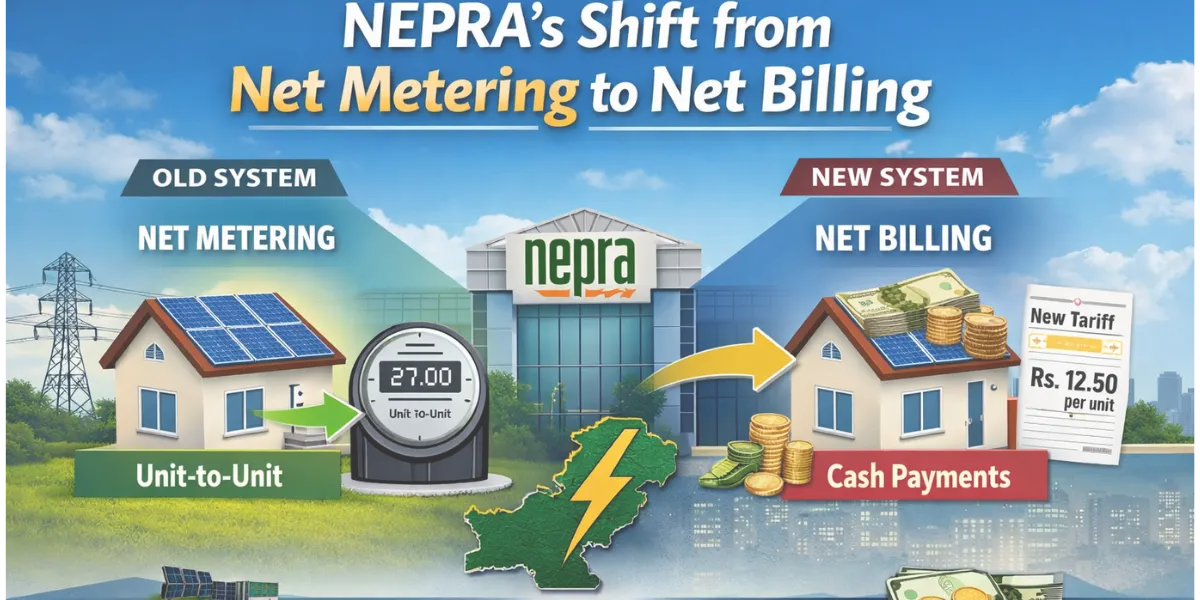
If you have a rooftop solar system or you are planning to install one, this article will help you understand everything in very simple words.
What Has Changed After the Shift from Net Metering to Net Billing?
NEPRA has introduced new rules in 2026 under the Presume Regulations. Under this system, the old net metering method is being replaced with net billing.
Before this change, solar users could send extra electricity to the national grid and get unit-for-unit adjustment. It means if you exported 100 units, you could use 100 units later without paying full price.
Now things are different.
Under net billing:
- Extra electricity will not be adjusted unit for unit.
- It will be bought at the national average energy price.
- Your imported electricity will be charged at the regular tariff.
- Payment for extra units will be settled quarterly.
- Agreements will be for 5 years with option of renewal.
Earlier, many consumers were receiving around Rs 27 per unit for exported electricity. Now the buyback rate will depend on the average energy price which is usually lower than the consumer tariff.
Simple Difference Between Old and New System
Here is a simple difference between old and new system after the NEPRA shift from net metering to net billing:
|
Feature |
Net Metering (Old System) |
|---|---|
|
Adjustment |
Units vs Units |
|
Buyback Rate |
Around Rs 27 per unit |
|
Billing Cycle |
Monthly net adjustment |
|
Agreement Duration |
7 years (previously common) |
This small table can help you understand quickly what has changed.
Why Is This Important for Solar Users?
This update matters because it changes how much benefit a rooftop solar owner can get.
In the old system, if your solar panels produced more electricity during the day, those extra units reduced your night usage directly. That gave strong savings.
Now, under net billing, exported electricity will be converted into rupees first. Then those rupees will adjust against your bill. Since consumer tariff is higher than the buyback rate, the savings may reduce.
For example:
If:
- You buy electricity at Rs 45 per unit
- Your exported electricity is purchased at around Rs 20–25 per unit
There is a clear difference. That gap affects your total savings.
How Will This Affect Return on Investment?
Many people install solar because they want to recover their cost in 3 to 5 years. With the older method, payback period was shorter because adjustment was equal.
Now experts believe recovery time may increase.
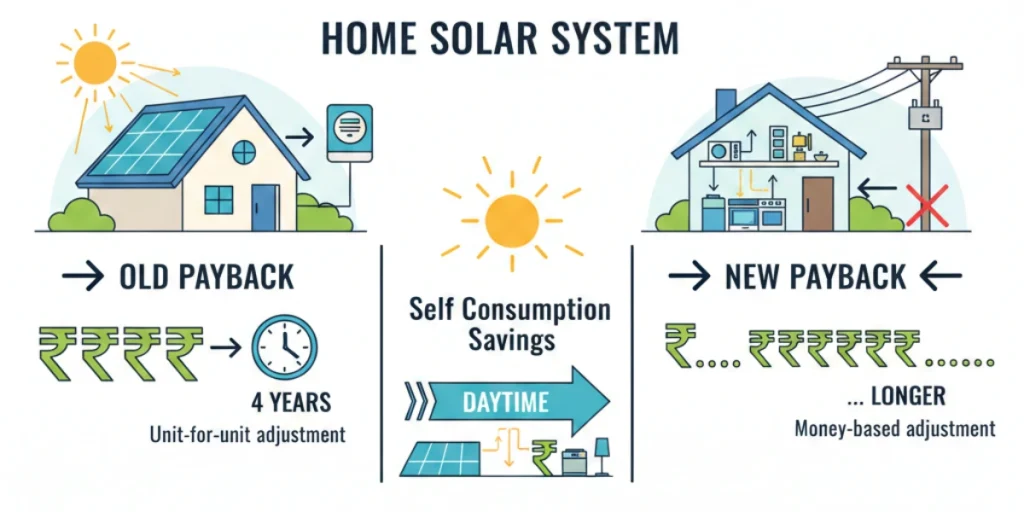
Let’s say a home system costs 12 to 15 lakh rupees. Previously the system might recover cost in 4 years depending on usage. With new billing rules, recovery could take longer because exported power earns less value.
However, self consumption still gives full benefit. If you use more electricity during the daytime, your savings remain strong.
Does This Apply to Everyone?
The new framework applies to:
- New solar applicants
- Biogas based power consumers
- Consumers entering agreement under 2026 rules
Existing users may continue under previous terms depending on their contract period. It is important to check your agreement papers carefully.
Why Is There Criticism?
Some political leaders and energy experts say this decision may slow down rooftop solar growth.
Their concerns are:
- Lower incentive for new installations
- Reduced attraction for middle income families
- Possible impact on clean energy progress
They believe the earlier structure encouraged investment and reduced load on the grid during daytime.
On the other side, regulators argue that balance in the power sector is necessary. They say rising solar exports were increasing financial pressure on distribution companies.
What Should Consumers Do Now?
If you already have solar:
- Check your contract duration.
- Confirm whether your system remains under old structure.
- Try to increase daytime electricity use to maximize benefit.
If you plan to install:
- Calculate payback period carefully.
- Focus more on self consumption capacity.
- Compare installation cost and expected export income.
Do not rely only on old savings examples. The situation has changed.
Is Solar Still Worth It?
Yes, but planning matters more now.
Even with the new update NEPRA’s shift from net metering to net billing, solar still reduces dependency on grid electricity. It protects you from future tariff hikes. It gives energy stability.
The main difference is that exported electricity is less rewarding than before. So systems should be sized according to your actual usage, not only for selling extra units.
FAQs
Final Thoughts
The new update Nepra’s shift from net metering to net billing is a major policy change in Pakistan’s energy sector. It replaces the 2015 regulations and introduces a money based settlement model instead of unit adjustment.
For some consumers this may reduce savings. For others who use most of their power during the day, impact may be limited.
Before making any decision, understand your usage pattern. Do simple math. Read official documents. And avoid panic based on social media posts.


